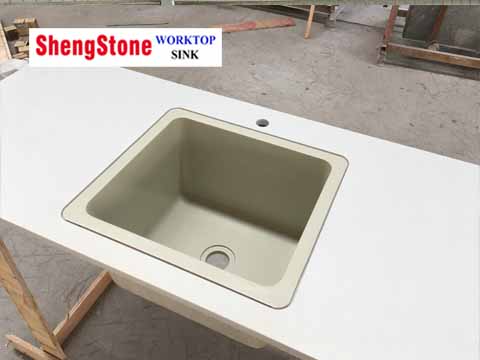
What Are Epoxy Lab Countertops Made Of?
Epoxy lab countetops Premium Material Formula
Epoxy lab countertops feature a premium build of modified epoxy resin and inert mineral fillers. Specifically, manufacturers thermally cure the blend into solid, compact, nonporous slabs with zero internal layers.
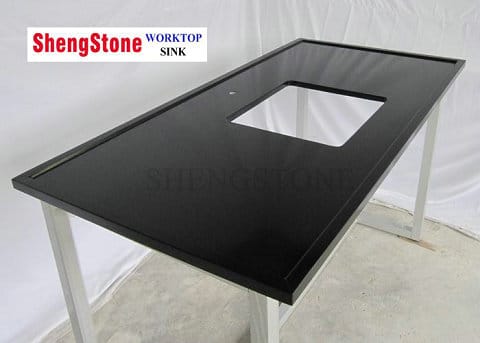
SEFA 3 Approved Safety Performance
Furthermore, all ShengStone laboratory epoxy work surfaces use high-purity anti-corrosion resin that meets official SEFA 3 chemical resistance standards. Most importantly, this integrated casting design removes gaps that collect lab chemicals and harmful bacteria.
What Is The SEFA 3 Standard For Epoxy Lab Worktops?
Official Standard Definition
To begin with, SEFA 3 refers to the mainstream American testing standard for laboratory bench tops, covering chemical, heat and impact resistance.
Professional Anti-Corrosion Capacity
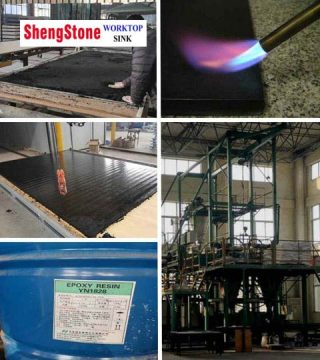
As a result, qualified solid epoxy lab bench tops resist 49 common lab corrosives without etching, discoloration or softening. In fact, every ShengStone lab-grade epoxy work countertop passes full SEFA 3 compliance testing.
Are Epoxy Lab Countertops Seamless?
Integrated Seamless Molding Technology
Undoubtedly, one-piece cast epoxy resin lab bench surfaces deliver full seamless performance. In particular, our factory integrates epoxy sinks, drip edges and equipment cutouts during production to eliminate joint gaps.
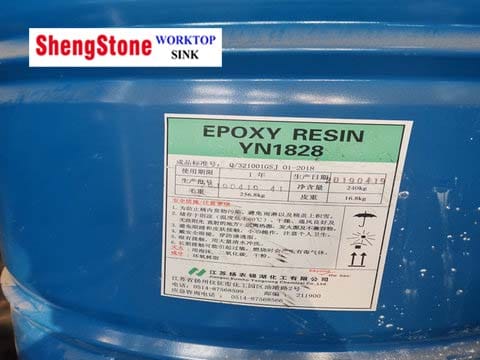
High-Precision Experimental Environment
Thanks to this design, this key benefit helps chemistry labs avoid residual reagent buildup, maintaining a clean and precise experimental working environment at all times.
Importance Of Laboratory Countertops
Core Laboratory Working Foundation
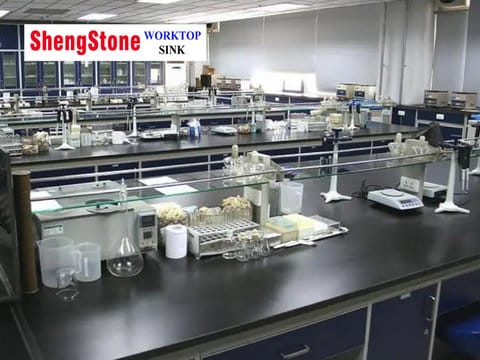
Generally speaking, laboratory countertops form the core working foundation for all lab operations. For this reason, their quality directly impacts experiment accuracy, workflow efficiency and overall lab hygiene standards.
Superior Comprehensive Performance
Consequently, among common countertop materials, solid epoxy countertops top choices for modern labs due to their stable structure and outstanding comprehensive performance.
Raw Materials And Production
Advanced Integrated Casting Process
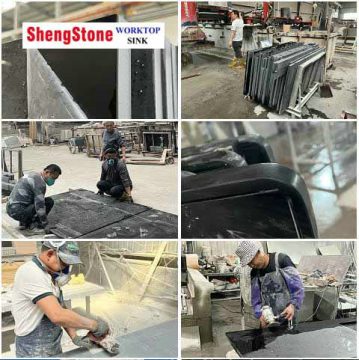
In order to fully understand its advantages, you can easily recognize the strengths of premium laboratory epoxy work surfaces by studying their unique composition and production process.
Accurate Proportioning and Thermal Curing
Different from layered composite countertops, they adopt integrated casting technology. Afterwards, proportionally mixed raw materials undergo thermal curing to form dense, layer-free integral slabs.
Chemical And Physical Properties
Standardized Anti-Corrosion Formula
It is well known that material composition defines the core performance of lab countertops. Accordingly, all ShengStone epoxy countertops adopt high-purity anti-corrosion resin compliant with official SEFA 3 standards.
Enhanced Structural Durability
This professional formula effectively resists long-term erosion from acids, alkalis and organic solvents. Meanwhile, inert fillers enhance slab hardness, stability and resistance against scratches, impacts and high heat.
Benefits Of Seamless Structure
Complete Elimination of Sanitary Dead Zones
Undeniably, integrated casting is the most prominent advantage of epoxy countertops. In detail, this seamless process eliminates hidden gaps found in traditional layered countertop designs.

Effortless Cleaning and Sterile Conditions
Obviously, tiny gaps easily trap residues, dust and bacteria to contaminate samples. On the positive side, the nonporous surface simplifies cleaning and builds a sterile, safe lab environment.
Application And Overall Value
Multi-Scenario Laboratory Adaptability
Unique material formulas and integrated processes make solid epoxy countertops durable, hygienic and highly corrosion-resistant.
Reliable Support for Standard Lab Operations
For these reasons, they fit harsh conditions in chemical, biological and educational labs. Ultimately, these functional surfaces ensure standardized, efficient and reliable daily laboratory operations.
FAQ
What are epoxy lab countertops made of?
Solid epoxy lab countertops consist of modified epoxy resin and inert mineral fillers, thermally cured into a single non-porous block. All ShengStone epoxy tops use high-purity anti-corrosion resin compliant with SEFA 3 standards, free of internal gaps or layers.
What does SEFA 3 mean for lab countertops?
SEFA 3 is the leading US lab surface standard testing chemical, heat and impact resistance. Qualified epoxy withstands 49 common lab corrosives without etching or discoloration. All our epoxy countertops pass full SEFA 3 testing.
Are epoxy countertops fully seamless?
Yes. One-piece cast epoxy forms a gapless surface. We can pre-mold epoxy sinks, marine drip edges and cutouts in the factory to stop chemical residue buildup in lab stations.
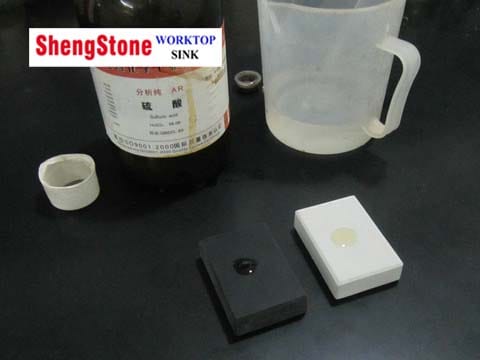
Can epoxy worktops resist 98% concentrated sulfuric acid?
Premium lab-grade solid epoxy tolerates long exposure to 98% sulfuric acid without blistering, fading or corrosion. ShengStone slabs pass a 72-hour concentrated acid soak test for chemistry labs and fume hoods.
What temperature can epoxy lab benche tops handle?
Lab epoxy handles instant heat up to 177°C (350°F) for hot glassware and heating plates. Avoid leaving open flames on the surface over 10 minutes to prevent permanent thermal haze.