
epoxy marine edges
In general, epoxy marine edges serve as essential accessories for standard laboratory furniture. Simply put, they adopt a scientific structure, stable physical and chemical properties and flexible installation methods.
Specifically, they fully meet the daily operation needs of chemical, biological, pharmaceutical and testing laboratories. Moreover, they provide reliable and long-term protection for lab equipment and supporting facilities.
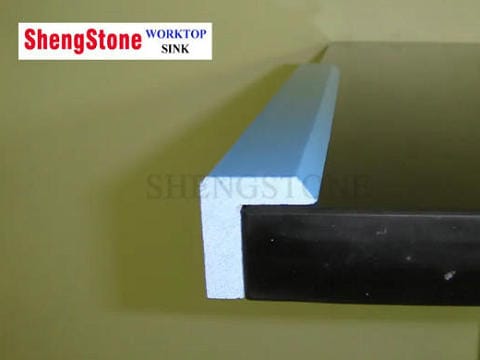
In addition, these accessories effectively optimize the overall experimental working environment. At the same time, they steadily upgrade the safety management level of the entire laboratory.
Accordingly, with all these advantages, they are indispensable basic components for the construction of modern, standardized and high-spec laboratories.
Practical Application Problems & Solutions
In daily work scenarios, laboratory work often brings common operational troubles. To be precise, typical issues include tabletop liquid leakage, reagent splashing and surface corrosion damage.
As a result of these flaws, these recurring problems greatly shorten the service life of laboratory equipment. Furthermore, they threaten experimental safety and damage on-site environmental hygiene.
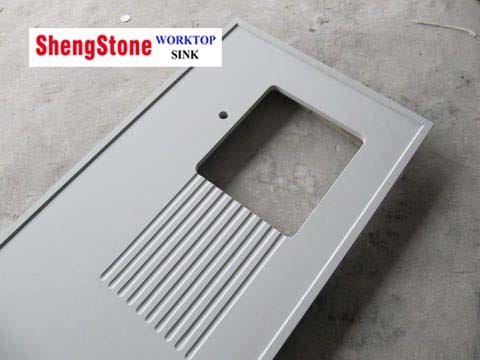
For this reason, epoxy marine edges solve these practical problems as core tabletop accessories. Most importantly, they fit closely with solid epoxy tabletops on all types of laboratory benches.
Besides their stable fitting performance, they deliver excellent corrosion resistance and full waterproof performance. Therefore, they become standard safety parts for modern laboratory daily operation.
Core Functions & Product Advantages
Fundamentally, epoxy marine edges are professional anti-drip edge structures customized for laboratory tabletops. Notably, manufacturers adopt the same high-grade solid epoxy resin used for premium lab countertops.
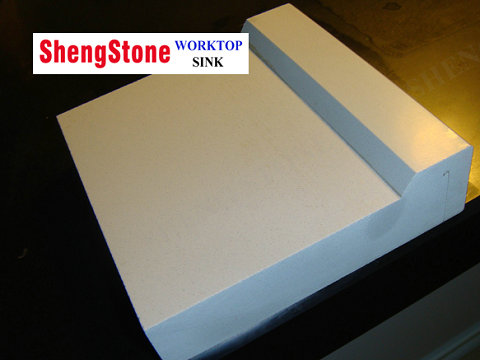
In clear comparison, they show far better performance than ordinary plastic, glass glue and common resin accessories. Meanwhile, they own stable and reliable lab-grade comprehensive performance.
In particular, they feature acid and alkali resistance, high temperature resistance and complete anti-seepage ability. Simultaneously, they support simple and fast daily cleaning.
In actual daily use, they block spilled reagents and washing water from flowing over table edges. In turn, they prevent cabinet rust, floor slipping and cross-site contamination effectively.
Furthermore, apart from basic functions, their compact dead-corner-free structure fully complies with strict laboratory hygiene and safety standards.
Production Process & Structural Features
Primarily, this product adopts modified epoxy resin and inert fillers as raw materials. Additionally, it uses integral casting and compression molding for standardized production.
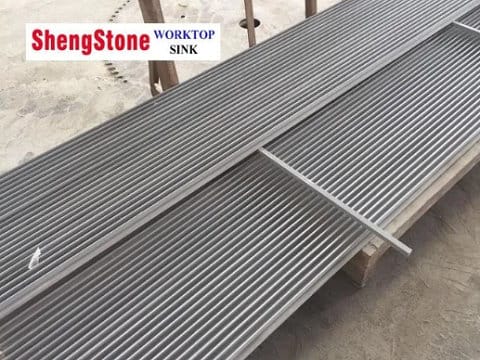
After professional high-temperature curing treatment, it forms a dense and non-porous integral structure. Hence, it has an ultra-low molding shrinkage rate to avoid cracking and water leakage.
Subsequently, workers can polish the product into integrated round corners without splicing gaps. As a result, it bonds seamlessly with tabletops to achieve perfect waterproof sealing.
Moreover, beyond basic sealing performance, it boasts high dimensional precision and supports customized colors, radians and specifications for diverse lab demands.
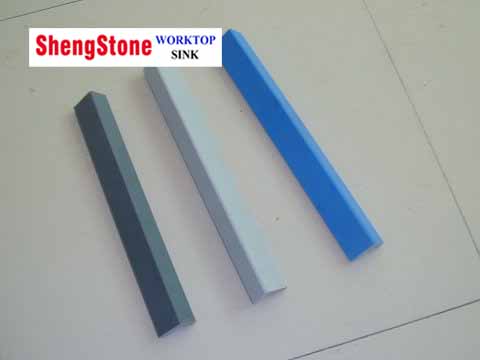
Beneficially, its polished smooth surface allows easy daily cleaning. In addition, it resists acids, alkalis, organic solvents, wear, impact, mildew and moisture.
Thanks to the integrated one-piece molding process, it eliminates glue failure and detachment risks. Accordingly, it adapts to harsh laboratory environments and ensures a long service life.
Lastly, to sum up its practical merits, the product features simple installation and stably prevents liquid overflow and leakage in daily experiments.
Types of Product Craft & Applicable Scenarios
First of all, integral molded epoxy marine edges apply to high-standard new laboratories. Specifically, they suit physical and chemical labs, precision instrument rooms and fume hood workstations.
In contrast, bonded epoxy marine edges adopt prefabricated strips for on-site installation. In practice, construction workers use professional two-part epoxy adhesive for bonding and fixing.
Economically speaking, this bonding method has obvious cost advantages and flexible on-site construction. For this reason, it is very suitable for old laboratory table renovation and temporary bench upgrades.
Standard Specification & Appearance Design
First and foremost, this product strictly follows official laboratory design codes. Meanwhile, it matches most mainstream epoxy tabletop products on the global market.
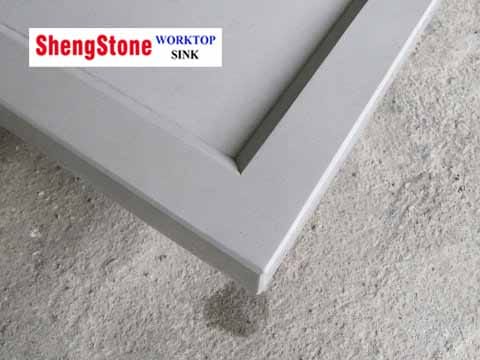
It specially adopts an upward raised integral drip lip design. As standard configuration, the standard drip lip height ranges from 5mm to 10mm for stable liquid blocking.
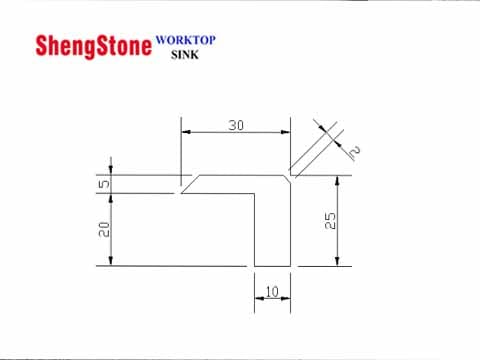
Due to this scientific and reasonable dimension, it contains spilled liquid efficiently. Besides, it never occupies working space or interferes with experiments and instrument placement.
Furthermore, all exposed edges are polished with R3/R5 round corners or 45° chamfers. As a result, the finished surface is smooth and burr-free for safe operation.
Apart from basic liquid blocking functions, the optimized edge structure avoids water dripping on cabinets and floors. It also prevents operator bumps and surface scratches.
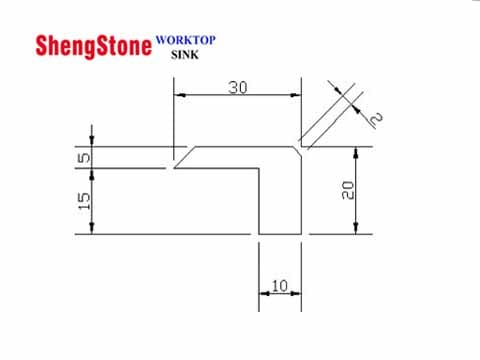
In general, it balances practical performance and on-site safety perfectly. Additionally, multiple matching colors are available for unified laboratory interior styling.
To be specific, optional colors include dark gray, light gray, off-white and light blue. Naturally, these colors fit various laboratory decoration and layout schemes.
Undoubtedly, superior physical and chemical properties constitute the core competitiveness of the product. Specifically, manufacturers mix high-density solid epoxy resin with refined quartz sand for production.
Physical & Chemical Performance Indicators
After precise processing, the whole product undergoes integral high-temperature curing treatment. Gradually, it forms a compact and uniform solid structure without capillary pores.
Owing to this unique structural feature, it brings an ultra-low water absorption rate. In terms of chemical resistance, the product resists erosion from concentrated acid, nitric acid, organic solvents and daily detergents.
As proven by professional tests, standard 24-hour corrosive immersion tests verify its stability. It keeps intact without discoloration, peeling or liquid penetration after corrosion.
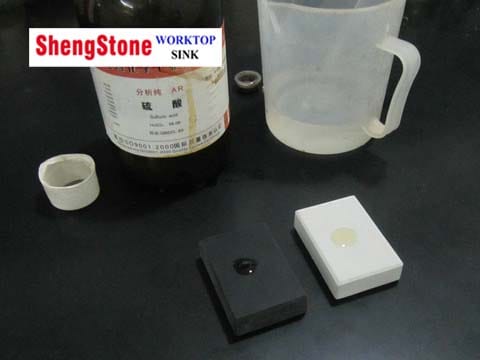
Besides reliable chemical stability, it also withstands short open-flame exposure without deformation or cracking. Unlike inferior products, it supports convenient on-site maintenance.
Once minor damage occurs during use, staff can polish and fill surface scratches and impact dents on site. This effectively restores surface integrity and reduces long-term laboratory maintenance costs.
Standard Construction & Installation Guidelines
Generally speaking, standardized installation steps guarantee the long-term stable performance of epoxy marine edges. For bonded products, workers first polish the bonding surfaces.
Specifically, they use 80–100 grit sandpaper to remove dirt and oxide layers, then degrease surfaces with alcohol and dry them completely.
After thorough surface preparation, workers apply evenly mixed 1:1 two-component epoxy glue. They fix the strips and maintain clamping pressure for 12 hours for full curing.
Once fully fixed in place, workers fill assembly gaps and seams with color-matched epoxy putty. This creates hygienic seamless joints meeting lab cleanliness rules.
In direct comparison, integral molded edges need no secondary processing. Thus, they can be put into use immediately after tabletop placement with stable sealing performance.
Product Application Value
In summary, epoxy marine edges are small but irreplaceable components for standard laboratory construction. They directly affect daily operation quality and long-term maintenance costs.
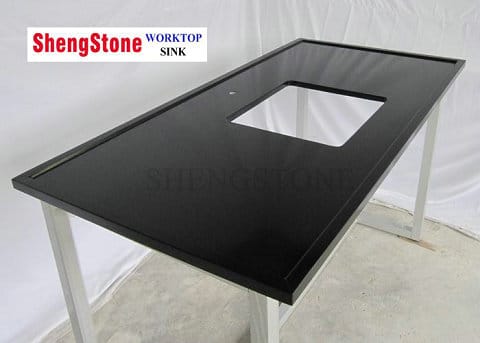
Without qualified accessories, laboratories easily face various hidden problems. For instance, common issues include cabinet oxidation, wall corrosion and gap bacterial growth.
Without effective protection, continuous liquid seepage often occurs. Gradually, these problems increase cleaning costs and bring chemical leakage safety hazards.
Fortunately, epoxy marine edges effectively solve these common industry pain points. They feature seamless waterproofing, strong corrosion resistance and easy daily cleaning.
Moreover, their repairable solid structure adapts well to harsh lab environments. Ultimately, they greatly reduce safety and hygiene risks in all experimental work.
FAQ
Q1: What is epoxy marine edge used for on lab countertops?
A1: Basically, it is a raised anti-drip trim installed along tabletop edges. Specifically, it stops spilled reagents and washing water from dripping onto cabinets to effectively prevent corrosion, floor slipping and laboratory contamination.
Q2: What is the difference between the two production types?
A2: In general, integral molded edges form seamless unity with tabletops for high-end new labs. Meanwhile, bonded edges are cost-effective and ideal for old laboratory table renovation scenarios.
Q3: What is the standard drip lip height?
A3: Normally, the standard drip lip height ranges from 5mm to 10mm. Notably, it contains overflow liquid effectively without occupying limited experimental operating space.
Q4: Can workers repair damaged epoxy marine edges on site?
A4: Of course. Workers can polish and fill minor scratches and dents on site easily. In turn, this restores complete surface integrity and saves long-term maintenance costs.
Q5: What colors do the edges support?
A5: Currently, available colors include dark gray, light gray, off-white and light blue. Furthermore, they match most epoxy tabletops and unify overall laboratory decoration styles.
Q6: What chemical resistance do the edges have?
A6: Essentially, made of fully cured solid epoxy, it resists concentrated acid, nitric acid and various organic solvents. Besides, it stays intact after 24-hour corrosive immersion without peeling or discoloration.