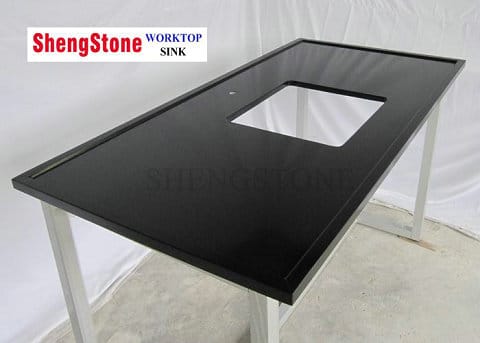
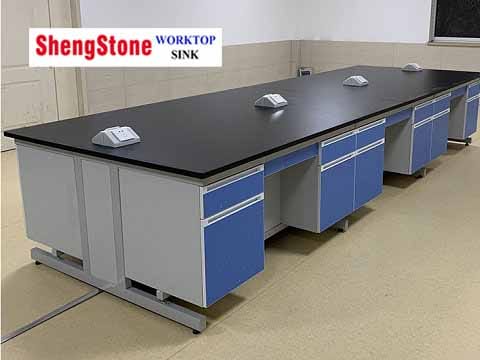
Chemistry Lab Countertops
Chemistry labs feature the most demanding working conditions of all laboratory types. Specifically, daily experiments involve corrosive acids, strong alkalis, volatile solvents, and long-term high-temperature operations. The right Chemistry Lab Countertop is crucial because countertops directly contact these harsh substances, so material quality affects safety, test accuracy, stability, and maintenance costs. For this reason, three mainstream materials serve chemistry labs: epoxy resin, phenolic resin, and stainless steel.
To conclude, epoxy resin remains the only high-performance and reliable solution for formal chemistry lab countertops. On the one hand, phenolic resin only meets basic teaching needs with limited resistance. On the other hand, stainless steel prioritizes sterile hygiene instead of anti-corrosion ability. Therefore, epoxy resin ensures safe, stable and long-lasting chemical laboratory operations.
What is the best material for chemistry lab countertops?
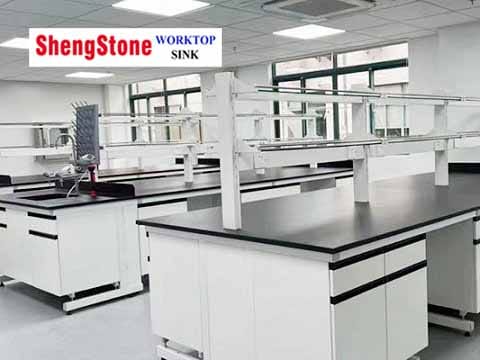
Overall, epoxy resin is the undisputed top choice for professional chemistry lab countertops. First, its dense, seamless and non-porous structure delivers reliable chemical inertness against common acids, alkalis and organic solvents. Additionally, it withstands continuous heat up to 200°C without deformation. Consequently, the tight surface blocks liquid penetration, avoids residue buildup and prevents cross-contamination in daily tests.
Why is epoxy resin ideal for chemical laboratories?
In fact, epoxy resin outperforms other materials with stable, all-round performance for intensive chemical work. To begin with, its gap-free structure resists residue accumulation and microbial growth to keep surfaces clean and consistent. Furthermore, it stays stable under repeated reagent splashes, scrubbing and continuous heating. Finally, it offers over 15 years of service life and cuts long-term lab renovation costs effectively.
Can phenolic resin work for lab worktop?
In general, phenolic resin only fits low-intensity teaching chemistry labs and cannot support professional research. It tolerates weak detergents and mild solutions, but in contrast, it fails against strong corrosive liquids like sulfuric acid and nitric acid. Gradually, long-term chemical exposure causes bubbling, fading and structural damage. Moreover, it also lacks stable heat resistance and cracks easily under high temperature.
Are stainless steel countertops good for Chemistry labs?
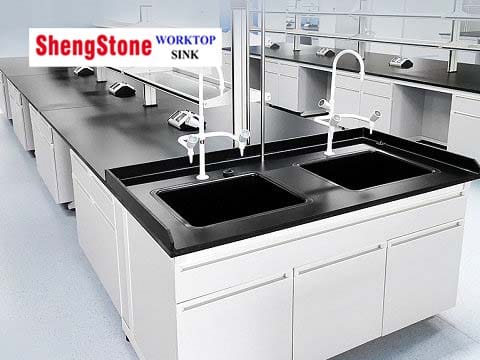
By comparison, stainless steel works well for sterile labs but is unsuitable for heavy-duty chemistry environments. Both 304 and 316 grades resist daily oxidation, yet they still react with strong acids and chloride solvents. As a result, corrosive liquids leave permanent pits and rust marks. Meanwhile, soft surfaces scratch easily, trap invisible residues and gradually reduce experimental data accuracy over time.
What core properties do lab countertops require?
Basically, trusted chemistry lab countertops must meet three core performance standards. Primarily, they need solid chemical resistance to fight corrosive reagents and organic solvents. Secondly, they require stable structures to withstand continuous high temperatures without cracking or warping. Lastly, non-porous surfaces enable full cleaning and eliminate hidden cross-contamination risks entirely.
Is epoxy resin worth the extra cost for chemistry labs?
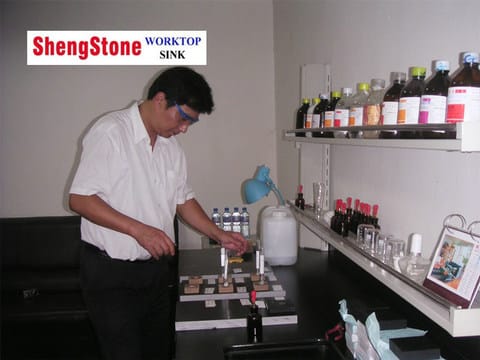
In short, epoxy resin justifies its higher upfront cost for professional chemistry facilities. For one thing, it avoids frequent repairs, surface polishing and early replacements common with low-grade materials. For another, its stable anti-corrosion and heat-resistant features reduce test errors from surface damage and contamination. Ultimately, it delivers reliable safety and stability for all professional chemical labs.